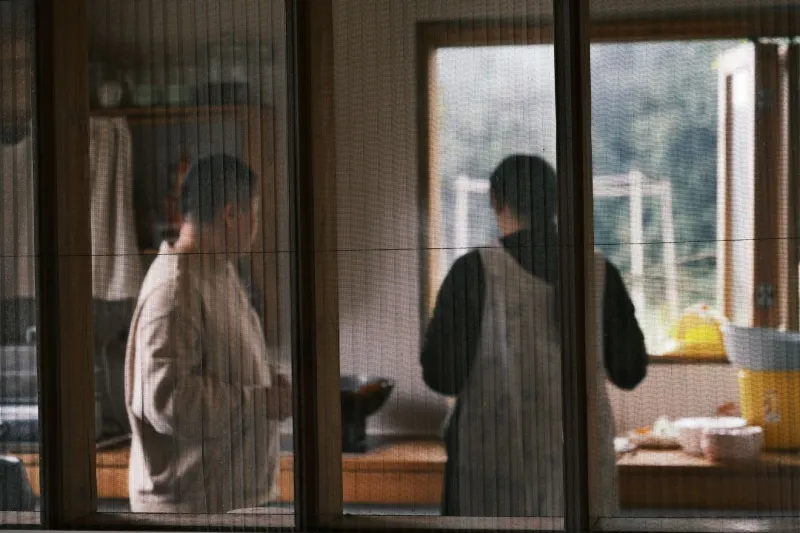
The Slow Burn: How Japanese Adult Cinema's Narrative Architecture Rewires the American Appetite for Desire
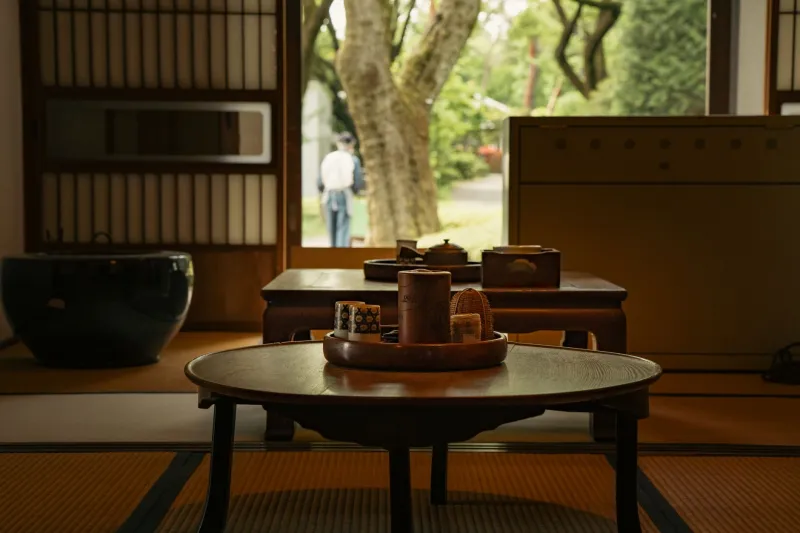
There is a moment, familiar to any viewer who has spent time with Japanese adult cinema, when the scene has not yet arrived at its destination but already feels complete. A woman pours tea with practiced precision. A man hesitates at a doorway. Two people speak around a subject that neither will name directly. The tension in these moments is not incidental — it is the product of a deliberate and sophisticated storytelling tradition that treats anticipation not as a prelude to the real content, but as the content itself.
For American audiences raised on a diet of Western adult entertainment, where the narrative economy tends to dispense with context in favor of immediate physical encounter, this approach can initially seem counterintuitive. Yet the growing engagement of American viewers with Japanese adult productions — and specifically with the hitozuma genre, which centers on married or mature women navigating the complexities of desire within established domestic lives — suggests that something in this slower methodology speaks to needs that faster content cannot address.
The Architecture of Setup
Western adult productions have historically operated on a logic of efficiency. The scenario is established swiftly, the participants are introduced with minimal biographical texture, and the physical encounter follows almost immediately. This model reflects a broader cultural preference for directness and a certain impatience with ambiguity — values that appear throughout American entertainment, from action films to sitcoms structured around rapid comedic payoff.
Japanese adult cinema operates from a different set of assumptions. A production in the hitozuma tradition might spend a substantial portion of its runtime establishing who these people are before exploring what they want. A character's marital history, domestic routines, unspoken frustrations, and quiet longings are communicated through gesture, dialogue, and environmental detail. The viewer is invited to understand the situation before being invited to observe it.
This is not inefficiency. It is a different theory of engagement — one rooted in the conviction that desire is more legible, and more affecting, when it emerges from a comprehensible human context.
Parallels in Mainstream Japanese Storytelling
To understand why Japanese adult productions prioritize narrative setup, it helps to consider the broader storytelling traditions from which they emerge. Japanese cinema has long demonstrated a preference for what might be called emotional accumulation — the gradual layering of mood, character, and situation until the viewer is fully immersed in a world before any dramatic event disturbs it.
Filmmakers such as Yasujiro Ozu built entire careers on this principle, constructing films in which domestic life is observed with such patient attention that the smallest rupture — a departure, a confession, a silence — carries enormous weight. The hitozuma genre in adult cinema draws on a similar sensibility. The married woman at its center is not a cipher but a fully realized figure whose circumstances give her choices meaning and her desires consequence.
American viewers may not consciously recognize this lineage, but they respond to its effects. When a scenario has been properly established, the emotional stakes feel real. The viewer is not merely watching bodies but following people — and that distinction, subtle as it may seem, transforms the nature of engagement entirely.
The Psychology of Delayed Gratification
Research in cognitive psychology has long documented the paradox of delayed gratification: the anticipation of a reward frequently generates more sustained pleasure than the reward itself. This phenomenon, sometimes described in terms of dopaminergic anticipation, helps explain why the buildup to an event can be more emotionally activating than the event's arrival.
Japanese adult cinema, whether by design or by cultural intuition, has structured itself around this psychological reality. The elaborate setups, the carefully constructed relationship dynamics, the scenes of domestic tension that precede any physical encounter — these are not padding. They are the mechanisms by which the viewer's investment is deepened and their eventual engagement made more intense.
For American viewers who have grown accustomed to content that delivers stimulation immediately, the experience of watching a well-constructed Japanese adult narrative can feel genuinely revelatory. The realization that the waiting itself is pleasurable — that the texture of anticipation has value independent of what follows — represents a recalibration of viewing expectations that many find difficult to reverse.
Situational Specificity and Emotional Credibility
One of the most distinctive features of Japanese adult narrative construction is its commitment to situational specificity. Rather than presenting generic scenarios designed to appeal to the broadest possible audience, Japanese productions tend to invest in particular circumstances: a specific kind of marriage, a specific kind of loneliness, a specific kind of temptation arising from a specific set of conditions.
This specificity is, counterintuitively, what makes the content more universally affecting. When a scenario feels genuinely particular — when the viewer senses that someone thought carefully about this woman's life, this man's hesitation, this household's unspoken dynamics — it acquires a credibility that generic setups cannot manufacture. The viewer does not merely observe; they recognize.
In the hitozuma context, this recognition often centers on the emotional realities of long-term commitment: the way desire becomes complicated by familiarity, the way longing persists and transforms within the structures of domestic life, the way a look or a gesture can carry years of unspoken history. These are not experiences unique to Japan, and American viewers, encountering them rendered with care and precision, frequently find them more affecting than content that makes no such attempt at emotional truth.
What American Audiences Are Actually Seeking
The sustained and growing American interest in Japanese adult content — and in the hitozuma genre specifically — suggests that a meaningful segment of the viewing public is seeking something that Western productions have largely declined to provide: adult entertainment that treats its subjects as people, its scenarios as situations, and its viewers as individuals capable of engaging with complexity.
This is not a niche preference. It reflects a broader cultural moment in which American audiences across many entertainment categories are demonstrating appetite for slower, more character-driven content. The success of prestige television formats built on deliberate pacing and psychological depth, the renewed critical interest in slow cinema, the popularity of long-form podcasts and serialized audio dramas — all of these suggest that the appetite for narrative substance has not diminished in the digital age. It has, if anything, intensified in response to an information environment that otherwise relentlessly accelerates.
Japanese adult cinema, with its deep investment in the architecture of anticipation, meets this appetite in a domain where Western content has largely left it unaddressed.
The Invitation to Patience
What Japanese adult cinema ultimately offers American viewers is not simply different content but a different relationship with time. To watch a well-constructed hitozuma production is to accept an invitation to slow down — to allow a situation to develop, to permit characters to become legible, to experience desire as something that accrues rather than arrives.
For viewers who accept that invitation, the experience is rarely forgotten. The slow burn, once understood, becomes the standard against which faster alternatives are measured — and frequently found wanting. In this sense, Japanese adult cinema does not merely entertain. It educates the viewer's expectations, expanding their sense of what adult content can accomplish when it chooses to take its time.