Familiar Ground: Why Japanese Adult Entertainment's Embrace of Ordinary Women Resonates More Deeply Than Polished Fantasy
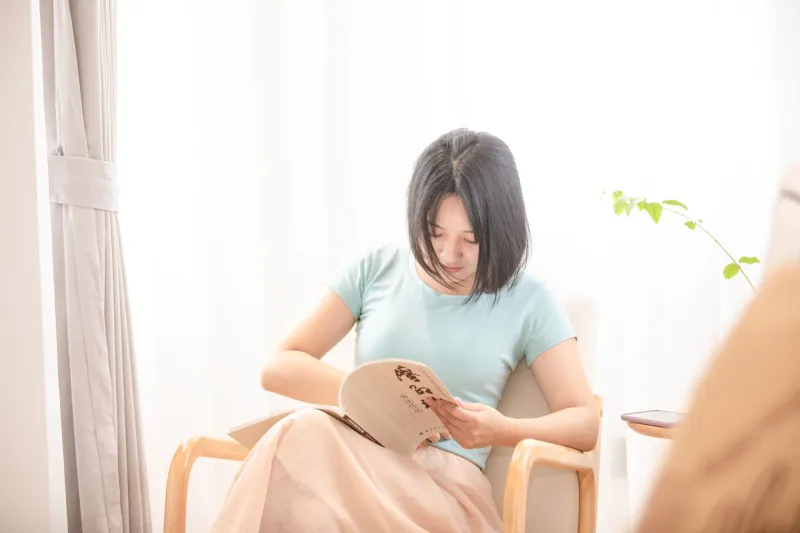
The Myth of the Ideal
American adult entertainment has, for decades, operated under a particular assumption: that desire is best served by extremity. The women who appear in mainstream Western productions are frequently selected for physical attributes that exceed statistical norms—surgically enhanced, professionally styled, and placed in environments that signal aspiration rather than familiarity. Las Vegas penthouses. Sprawling California estates. Gyms with improbable lighting. The implicit message is that fantasy requires distance from the ordinary.
Japanese adult content, particularly the hitozuma genre that has drawn significant international attention, proceeds from an entirely different premise. It argues, through every casting decision and set design choice, that genuine desire is not ignited by distance but by proximity. Not by the unattainable, but by the almost-familiar.
This is not a minor stylistic difference. It represents a fundamentally divergent theory of what erotic content is for.
Casting as Philosophy
The casting practices visible across Japanese adult productions reveal an editorial sensibility that would strike many Western producers as counterintuitive. Women in their thirties and forties are not merely tolerated in this market—they are frequently its most celebrated performers. Their appeal is understood to derive precisely from what conventional Western casting would filter out: visible signs of lived experience, physical characteristics that reflect ordinary life rather than professional optimization, and a quality of presence that reads as authentically human rather than performed.
For the hitozuma genre specifically—content centered on married women navigating the emotional and physical textures of long-term partnership—this casting philosophy is inseparable from the content's meaning. A performer who appears to have genuinely occupied domestic space, who carries herself with the particular confidence that comes from years of adult experience, contributes something to the viewer's engagement that no amount of production value can manufacture.
American audiences discovering this content often describe a disorientation that gradually resolves into something unexpectedly powerful. The initial unfamiliarity with a production aesthetic that does not announce itself through extreme visual signals gives way to a recognition: these situations, these women, these emotional registers feel real in ways that polished Western alternatives do not.
The Domestic Setting as Erotic Space
Perhaps no element of Japanese adult production philosophy is more instructive than its relationship to setting. Where Western productions frequently construct environments designed to signal status, wealth, or fantasy—spaces that viewers are not meant to recognize from their own lives—Japanese content returns repeatedly to the kitchen, the living room, the modest apartment bedroom.
This is not a budget limitation. Major Japanese studios with substantial production resources make the same choices that independent producers do. The domestic setting is a deliberate signal: what happens here is continuous with ordinary life rather than separated from it. The erotic is not quarantined in a fantasy space; it inhabits the same rooms where dinner is prepared and children are raised and marriages are maintained across decades.
For viewers—particularly American viewers who have spent years consuming content that aggressively separates the sexual from the quotidian—this integration can be genuinely revelatory. It suggests that desire is not a departure from real life but a dimension of it. That the woman one finds compelling is not necessarily the one furthest from ordinary experience, but sometimes the one most deeply embedded in it.
Relatability as Sophisticated Technique
It would be a mistake to interpret Japanese adult entertainment's preference for the ordinary as a failure of ambition. The aesthetic requires, in fact, a more demanding form of craft. When a production cannot rely on extreme visual spectacle to generate viewer engagement, it must succeed through subtler means: the quality of performance, the authenticity of emotional exchange, the camera's sensitivity to genuine rather than performed response.
This places significant demands on everyone involved. Performers cannot rely on physical exceptionalism to carry scenes; they must bring genuine presence and emotional intelligence to their work. Directors cannot obscure weakness with visual noise; pacing and framing must do genuine work. The result, when successful, is content that engages viewers at a register that purely spectacle-driven production rarely reaches.
The girl-next-door aesthetic, properly understood, is not a budget category. It is a commitment to a particular theory of what makes content compelling—one that prioritizes psychological resonance over visual shock, and sustained engagement over momentary intensity.
What American Audiences Are Finding
The growing Western audience for Japanese adult content, and for hitozuma content specifically, reflects something meaningful about what a significant segment of American viewers actually want from adult entertainment—as opposed to what decades of mainstream production have assumed they want.
Survey data and platform analytics consistently suggest that relatability and authenticity rank highly among the qualities that drive sustained viewer loyalty, as opposed to the one-time clicks that extreme content reliably generates. Viewers who discover Japanese adult content frequently describe not just enjoying individual titles but developing a genuine preference for the aesthetic framework—one that they find themselves unable to fully satisfy through domestic alternatives.
This is the paradox at the heart of the hitozuma phenomenon's international appeal: by refusing to optimize for the spectacular, Japanese producers have created content that optimizes for something more durable. Ordinary women in ordinary settings, presented with craft and care, turn out to generate extraordinary engagement. The familiar, it seems, is its own kind of fantasy—and for many viewers, a more satisfying one than anything the penthouse can offer.


