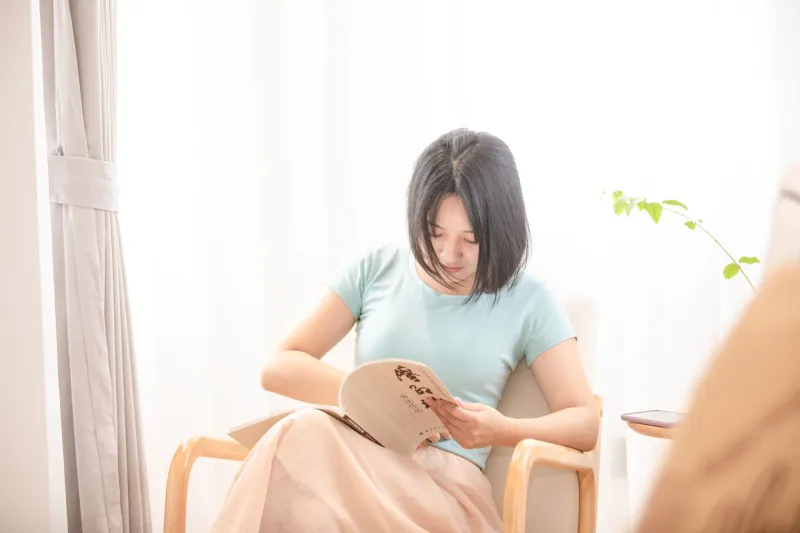
When the Ring Doesn't End the Story: How Japanese Adult Content Redefines Domestic Intimacy for American Viewers
There is a persistent narrative embedded in American popular culture: marriage is where desire goes to retire. From sitcom punchlines to romantic comedies that end precisely at the altar, the cultural message has been remarkably consistent — passion belongs to courtship, and domesticity is its natural antagonist. Japanese adult content, and the hitozuma genre in particular, proceeds from an entirely different premise. In doing so, it has quietly attracted a growing American audience that appears hungry for something that mainstream entertainment rarely provides.
The American Mythology of the Altar as Endpoint
To understand why the hitozuma genre resonates so powerfully with Western viewers, it helps to first examine what American storytelling typically does with marriage. The romantic arc — boy meets girl, obstacles arise, love conquers all — reliably concludes at the moment of commitment. What comes after is treated as either comedic fodder or narrative dead weight. Desire, in this framework, is fundamentally incompatible with permanence.
This is not merely a storytelling convention. It reflects and reinforces a broader cultural anxiety about long-term monogamy. American adults absorb, from an early age, the implicit message that sustained passion within a committed partnership is either improbable or, at best, the exclusive territory of the exceptionally lucky. The wedding is the finale. Everything after is maintenance.
Japanese adult content, particularly material centered on married women navigating domestic life, treats this assumption as not just incorrect but almost absurd. The intimacy it depicts is inseparable from context — the shared apartment, the familiar routines, the accumulated history between two people. Far from killing desire, these elements are presented as its very substrate.
Domesticity as Dramatic Terrain
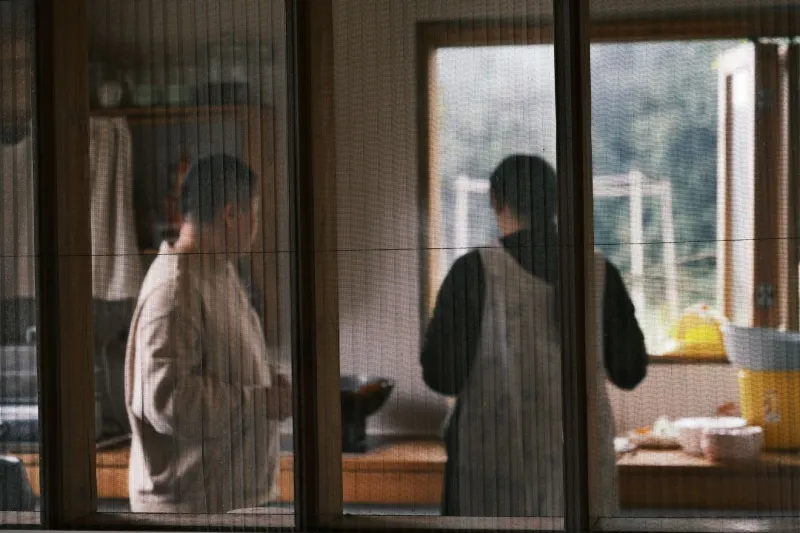
What distinguishes hitozuma-oriented content from more conventional adult material is its deliberate use of ordinary domestic settings as emotionally charged environments. A kitchen is not merely a backdrop; it carries the weight of daily life, of meals prepared and conversations had and time shared. A bedroom in this genre is not an anonymous space but a room with history.
This specificity functions as a form of storytelling in its own right. American viewers accustomed to the decontextualized aesthetics of mainstream Western adult entertainment often describe Japanese domestic content as feeling unexpectedly grounded. The scenarios carry a sense of interiority — of characters who exist before and after the scene, who have lives that extend in both directions. This quality is not incidental. It is a deliberate creative choice that reflects a fundamentally different philosophy about what makes intimate content compelling.
The hitozuma figure herself — the married woman at the center of these narratives — is rarely presented as a fantasy abstraction. She is rendered with the texture of lived experience: the small gestures, the particular way she occupies a familiar space, the suggestion of a life that is recognizably real. For American audiences who have been trained to expect either idealized fantasy figures or transgressive archetypes, this ordinariness registers as something close to revelation.
What American Interest Reveals About Domestic Dissatisfaction
The growing Western appetite for this genre is not simply a matter of aesthetic preference. It reflects something more substantive about how American attitudes toward marriage and monogamy are quietly shifting.
Recent years have seen a notable increase in public discourse around what researchers sometimes call "desire maintenance" in long-term relationships — the question of how couples sustain genuine intimacy across years and decades. Therapists, journalists, and cultural critics have all turned increasing attention to the gap between the idealized version of marriage that American culture sells and the more complicated reality that most couples inhabit. The popularity of books, podcasts, and articles on the subject suggests that this is not a niche concern but a widespread cultural preoccupation.
Japanese adult content, viewed through this lens, functions as a kind of fantasy literature for a particular anxiety. It does not promise that marriage is easy or that desire is effortless. What it offers, instead, is the proposition that long-term partnership can be a site of genuine erotic possibility — that familiarity and intimacy are not opposites but, under the right conditions, intensifiers of one another.
This is a message that American entertainment has rarely been willing to deliver without irony or qualification. That a niche genre of adult content is delivering it with apparent sincerity may say something revealing about where mainstream culture has failed its audience.
The Complexity of Commitment as Narrative Engine
One of the more sophisticated elements of hitozuma content, as experienced by attentive Western viewers, is its treatment of marital complexity not as a problem to be resolved but as a source of ongoing dramatic energy. The tensions inherent in long-term commitment — the weight of expectation, the negotiation of individual desire within a shared life, the way time transforms both people and relationships — are not obstacles to intimacy in this genre. They are its material.
This stands in sharp contrast to the dominant American model, in which relationship tension is typically a temporary condition on the way to resolution. The happily-ever-after is the destination, and once reached, the story ends. Japanese adult content that centers married women tends to resist this teleology. The relationship is already established; what unfolds within it is not a resolution but an exploration.
For American viewers, particularly those in long-term relationships of their own, this narrative architecture can feel surprisingly validating. It suggests that the complications of sustained partnership are not evidence of failure but simply the nature of the terrain — and that this terrain, properly navigated, contains its own form of richness.
A Genre That Asks Different Questions
Ultimately, what the hitozuma genre offers American audiences is not merely an alternative aesthetic but an alternative set of questions. Where mainstream American entertainment asks whether two people will end up together, this genre asks what it means to remain together — what desire looks like when it has had time to settle into something more durable than infatuation, and what intimacy becomes when it is built on genuine knowledge of another person.
These are not small questions. They sit at the center of how Americans are increasingly thinking about marriage, monogamy, and the long arc of romantic life. That a Japanese adult content genre is engaging them with more seriousness and nuance than much of mainstream American entertainment is, at minimum, worth noting.
At Hitozuma Realm, we have long understood that the appeal of this material extends well beyond surface-level novelty. The domestic settings, the married protagonists, the unhurried attention to context and character — these are not incidental features. They are the point. And for a growing American audience, they are precisely what has been missing.