The Familiar Room: How Japanese Adult Cinema Uses Domestic Ordinariness to Illuminate What American Viewers Fear About Settled Life
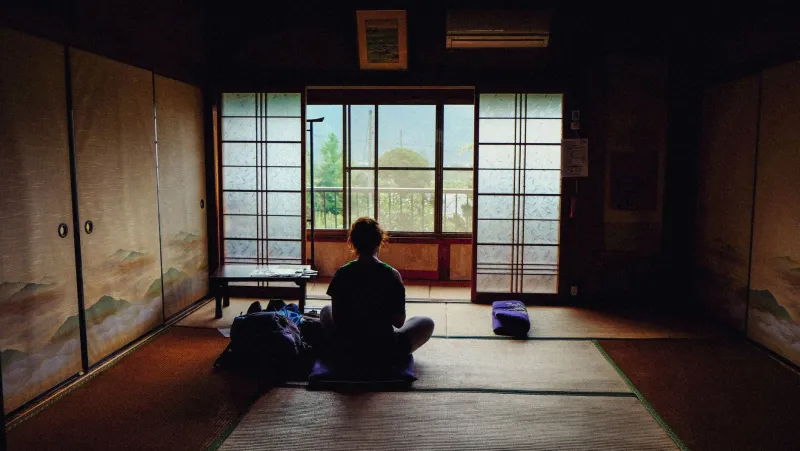
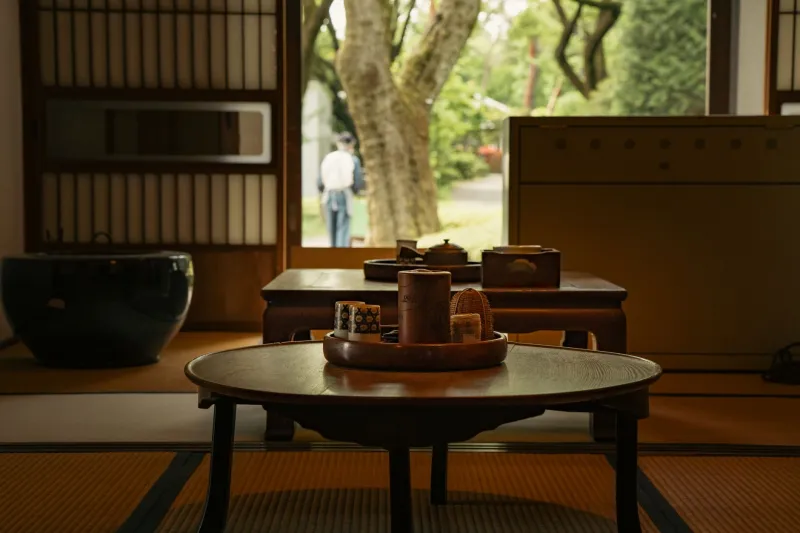
There is a particular kind of discomfort that arrives when a work of fiction holds a mirror too close. American viewers who encounter Japanese adult content for the first time frequently remark on one quality above all others: the settings look lived-in. A dish rack beside the sink. A folded cardigan on the back of a chair. Afternoon light falling at the angle it actually falls, rather than the angle a cinematographer has engineered for maximum flattery. These are not the trappings of fantasy. They are the trappings of Tuesday.
And yet, for a significant and growing segment of the American audience, it is precisely this quality that compels continued attention. Understanding why requires looking not just at what Japanese adult productions put on screen, but at what American productions have consistently refused to acknowledge.
The Architecture of the Everyday
Western adult entertainment has long operated under an implicit contract with its audience: the content exists in a world apart. Locations are staged to signal aspiration — hotel suites, open-plan lofts, pools that no one's neighbor actually owns. The underlying message is that desire belongs to a register of experience elevated above the domestic. Passion, in this framework, is something one escapes toward, not something that might be discovered within the routines one already inhabits.
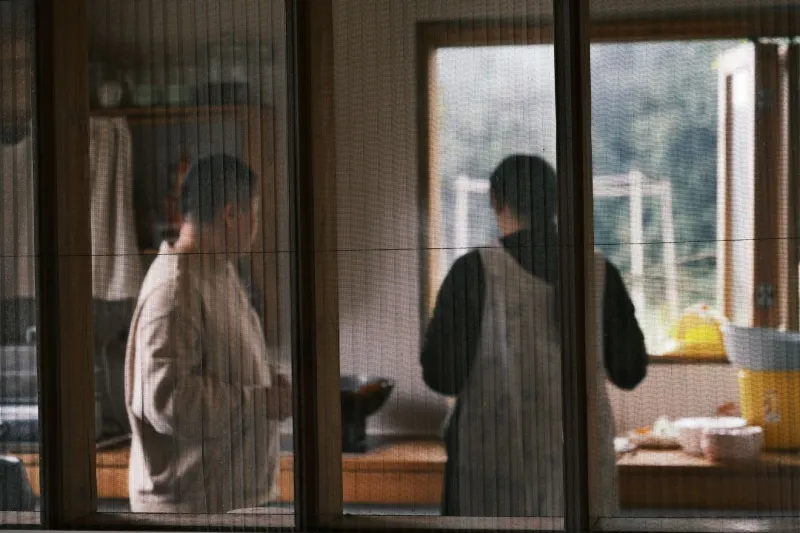
Japanese adult cinema, and hitozuma content in particular, proceeds from an almost diametrically opposed premise. The home is not a backdrop to be glamorized or evacuated. It is the subject. The narrative tension does not emerge from departure — from the hotel, the vacation, the encounter outside ordinary life — but from the friction and possibility latent within ordinary life itself. A woman preparing a meal. A couple whose conversation has grown efficient, stripped of the exploratory quality it once carried. The particular silence of a house in the middle of a weekday.
These images are not incidental. They constitute an argument: that desire does not require extraordinary circumstances, and that the domestic space, far from being desire's enemy, is in fact its most honest theater.
What American Viewers Bring to the Screen
To appreciate why this argument lands with particular force among American audiences, it is worth considering the cultural context those viewers carry into the experience. Marriage rates in the United States have been declining for decades, and among those who do marry, the discourse around long-term partnership is saturated with anxiety. The phrase "settling down" itself encodes an ambivalence — settling as in establishing, but also settling as in accepting less. Popular culture reinforces the idea that sustained commitment and sustained passion are, at some level, incompatible. The rom-com ends at the wedding. The prestige drama treats marriage as the beginning of entropy.
American adults navigating their own relationships thus arrive at Japanese adult content carrying a specific freight of unresolved questions. Is desire compatible with familiarity? Does routine necessarily erode attraction? Is the tension between stability and passion a problem to be solved, or simply a condition to be endured?
Hitozuma content does not answer these questions directly. What it does, with considerable sophistication, is refuse to treat them as settled. By placing desire firmly within the domestic frame — not despite the marriage but in active conversation with it — these productions suggest that the American binary between passion and commitment may itself be a cultural artifact rather than a psychological law.
The Mundane as Dramatic Engine
Consider the narrative mechanics at work in a representative hitozuma scenario. The setup rarely involves the removal of a character from her ordinary context. The tension is generated, instead, by what accumulates within that context: a glance across a room that carries more weight than words, the specific vulnerability of a person who is known rather than simply desired, the way long acquaintance creates its own form of intimacy that novelty cannot replicate.
This is not, it should be noted, a naïve or idealized portrait of domestic life. Japanese adult content in this genre is often frank about the ways that routine can produce distance, that familiarity can become a form of invisibility, that the people who share a household most completely may see each other least clearly. The dramatic energy frequently derives from a renegotiation of that visibility — a moment in which the ordinary is suddenly perceived as if for the first time.
For American viewers, this dynamic maps with unusual precision onto lived experience. The anxiety is not abstract. It is the specific worry that the person across the dinner table has become, through the very process of being known, somehow less available to desire. Japanese adult content does not dissolve that anxiety. It takes it seriously, which is a different and arguably more valuable response.
Realism as Radical Choice
There is a tendency in American critical discourse to treat stylized unreality in adult content as the default, and realism as a departure requiring justification. Japanese productions invert this hierarchy. The commitment to authentic domestic texture is not a concession to limited production budgets; it is an aesthetic and philosophical position. The ordinary household is chosen because it is where the questions that actually matter to adult viewers actually live.
This choice has formal consequences that extend beyond setting. Performances in hitozuma content tend toward restraint rather than performance in the theatrical sense. The emotional register is closer to the way people actually behave when they are genuinely affected by something than to the heightened expressiveness that American productions have standardized. The result is a viewing experience that feels less like observation and more like recognition.
Recognition, as any literary critic will note, is among the most powerful effects available to narrative art. It is also among the rarest in adult entertainment, where the dominant mode has long been projection onto fantasy rather than reflection of reality.
The Mirror and Its Implications
What Japanese adult cinema ultimately offers the American viewer, through its insistence on the domestic and the everyday, is permission to locate desire within the life one actually has rather than in the life one imagines having instead. This is a quieter proposition than most entertainment advances, and a more demanding one. It asks the viewer not to escape but to look more carefully.
For an American audience trained to regard settled domesticity as desire's terminus rather than its ongoing context, this reframing carries genuine weight. The ordinary house, rendered with attention and without apology, becomes something stranger and more interesting than any staged fantasy environment: a space where the real questions about long-term intimacy are allowed to remain questions, examined rather than resolved.
That, perhaps more than any specific narrative element, is what keeps American viewers returning to a genre that, on the surface, offers so little of what Western adult content has taught them to expect. The mirror is uncomfortable. It is also, for many, irreplaceable.