Constructed Longing: The Technical Grammar Behind Japanese Adult Cinema's Mastery of Withheld Revelation
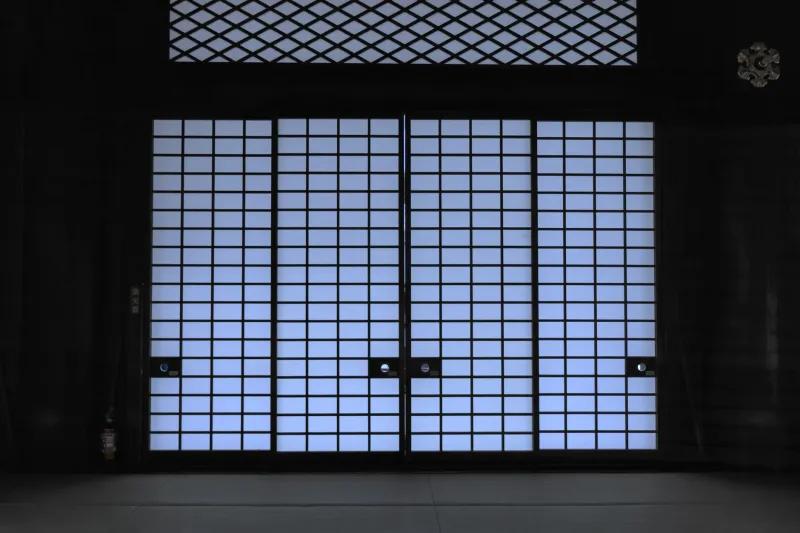
There is a moment, recurring across countless Japanese adult productions, that has no precise equivalent in mainstream Western pornography. The camera rests on a doorframe. A shoulder is visible. The rest of the frame is shadow, fabric, or the soft blur of a lens deliberately denied focus. Nothing explicit has occurred. And yet something undeniably erotic has already taken place — inside the viewer's mind, where the missing visual information has been supplied, amended, and charged with personal significance.
This is not accident. It is architecture.
Japanese adult cinema has, over several decades, constructed a remarkably consistent and technically sophisticated grammar of withheld revelation. Understanding that grammar — its camera logic, its editing cadence, its narrative scaffolding — offers American viewers and industry observers a more precise vocabulary for what they are responding to when they find these productions unexpectedly affecting.
The Frame as a Selective Instrument
In conventional American adult production, the camera's primary obligation is disclosure. The dominant visual logic is one of comprehensive documentation: the frame is positioned to confirm, to verify, to leave nothing ambiguous. This approach reflects a deeply embedded assumption — that desire is satisfied by evidence, and that the viewer's role is essentially passive reception.
Japanese productions operate under a different premise. The frame is understood not as a window but as a threshold — a boundary that defines what is known and what must be inferred. Camera placement in these films is frequently chosen not for optimal visibility but for optimal suggestion. A shot from behind a subject rather than in front. A composition that keeps the most charged element at the edge of the frame, partially cropped. A close-up on a hand, a collarbone, the side of a face, while the broader scene remains deliberately withheld.
This selectivity is not a workaround for censorship requirements, though censorship has certainly shaped certain conventions. It is a considered aesthetic choice that produces a fundamentally different relationship between image and viewer. The camera, by refusing to show everything, invites the viewer to construct what is missing — and what the viewer constructs is, by definition, calibrated to their own psychology.
Editing Rhythm as Psychological Instrument
Beyond individual shot composition, the editing structure of Japanese adult content reveals a distinct theory of how tension accumulates over time. American productions tend toward a rhythm of escalation — a relatively predictable progression from one stage to the next, with cuts arriving at intervals designed to maintain momentum and prevent the viewer from disengaging.
Japanese productions frequently invert this logic. Extended takes hold on moments of transition rather than moments of action. An editor might choose to linger on the interval before something occurs rather than the occurrence itself. The cut, when it arrives, often redirects attention rather than advancing the sequence — moving to a reaction, a detail, a pause — rather than delivering the expected continuation.
This editing philosophy creates a form of narrative suspense that is structurally analogous to what literary theorists call delayed gratification in prose. The reader — or viewer — is kept in a state of productive anticipation rather than continuous satisfaction. The distinction matters enormously. Anticipation is generative; it produces engagement, investment, and a heightened sensitivity to eventual resolution. Continuous satisfaction, paradoxically, tends toward numbness.
The Domestic Prologue as Tension Architecture
One of the most distinctive structural features of Japanese adult productions, particularly those within the hitozuma genre that forms the editorial core of this publication, is the sustained investment in pre-erotic narrative space. American productions typically minimize or eliminate this space, treating it as obligatory setup to be dispatched as efficiently as possible.
Japanese productions, by contrast, often devote substantial runtime to establishing the ordinary texture of a character's life — her domestic routines, her relationship to the spaces she inhabits, the quality of her attention to small tasks. This is not inefficiency. It is foundational work. By establishing a character as a complete human being embedded in a recognizable daily existence, the production creates the conditions under which the eventual departure from that ordinariness carries genuine weight.
The delayed reveal, in this context, is not merely a camera technique. It is a structural principle that operates across the entire length of the production. What is being withheld, at the largest scale, is the moment of transformation — the crossing of a threshold from one state of being to another. That crossing becomes meaningful precisely because the territory on the near side of the threshold has been so carefully mapped.
Obscuration as Invitation
It is worth addressing directly the role that censorship conventions have played in shaping these techniques, without overstating their influence. Japanese adult productions have operated under regulatory frameworks that require certain forms of visual obscuration. What is remarkable is how thoroughly these constraints have been absorbed into an aesthetic system that would be impoverished by their removal.
The strategic blur, the carefully placed object, the angle that acknowledges rather than resolves — these elements have become expressive tools rather than reluctant concessions. American viewers encountering Japanese adult content for the first time frequently report a paradoxical response: the obscuration increases rather than diminishes their engagement. This response is entirely consistent with what cognitive science suggests about attention and imagination. The mind, presented with incomplete information, does not disengage. It completes. And the act of completion is itself a form of participation.
This is the fundamental insight that Japanese adult cinema has operationalized with unusual sophistication: the viewer's imagination, once recruited as a collaborator, becomes the most powerful production resource available. No camera placement, no performer, no set design can produce an image as precisely calibrated to an individual viewer's psychology as the image that viewer generates from suggestion.
What American Productions Tend to Miss
The contrast with dominant American production conventions is instructive not as a value judgment but as a diagnostic tool. American adult entertainment has, in recent decades, moved steadily toward greater explicitness, higher production values in the conventional sense, and faster editorial pacing. These choices reflect real market research and genuine viewer preferences within a particular framework of expectations.
What they have largely abandoned is the productive discomfort of not-yet-knowing. The architecture of anticipation requires the viewer to remain in a state of incompleteness for longer than is strictly comfortable — and it is precisely that incompleteness that generates the psychological investment which makes eventual resolution so much more resonant.
For American viewers who have discovered Japanese adult content through streaming platforms and found themselves unexpectedly moved by it, this analysis may provide some orientation. The response is not inexplicable. It is the predictable consequence of encountering a visual grammar built around a different — and in certain respects more demanding — theory of how desire operates.
The withheld image is not an absence. It is an invitation. And the viewer who accepts it brings to the screen something no production budget can supply.