Seen and Acknowledged: How Japanese Adult Cinema Collapses the Distance Between Screen and Viewer
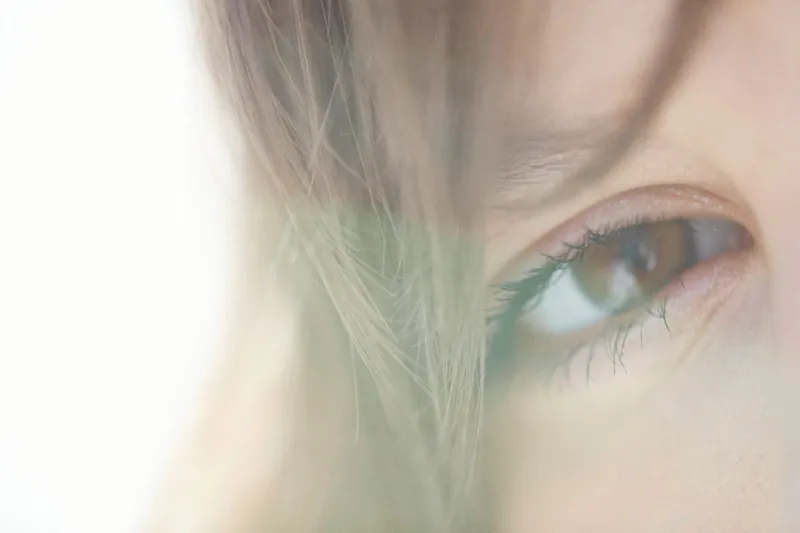
There is a moment, recognizable to anyone who has spent meaningful time with Japanese adult content, when the performer looks directly into the camera. Not the glancing, performative look-away that Western productions occasionally deploy as a flourish. Something steadier. Something that seems, improbably, to register the presence of whoever is watching. That moment—brief, unannounced, and quietly destabilizing—encapsulates a philosophical difference between two industrial traditions that is rarely discussed with the seriousness it deserves.
The distinction is not merely aesthetic. It is contractual. It concerns what the viewer is being invited to be.
The Spectator and the Witness
Western adult production, as a general rule, is built on the logic of the spectacle. The viewer occupies a position of privileged invisibility—present without being acknowledged, consuming without being implicated. Performers operate within a sealed world, enacting desire for an audience that the camera's conventions insist does not exist. This arrangement has its own pleasures, chief among them the freedom of consequence-free observation. But it also establishes a fundamental asymmetry: the person on screen is an object of attention, not a participant in a shared experience.
Japanese adult cinema, particularly within the hitozuma genre and its adjacent categories, operates under a different set of assumptions. The camera does not pretend the viewer is absent. Performers speak toward it, look into it, and modulate their responses in ways that seem calibrated to the awareness of being watched. The result is something closer to what literary theorists might call a second-person address—a mode of communication that positions the audience as a you rather than an anonymous they.
This shift from spectator to witness is not incidental. It carries emotional weight that compounds over the course of a scene.
Eye Contact as Ethical Event
In ordinary social life, sustained eye contact is one of the most intimate acts available to two people. It signals presence, attention, and a willingness to be known. It is also, notably, bidirectional—one cannot truly receive a gaze without, in some sense, returning it. This reciprocity is precisely what conventional Western adult content forecloses. The camera becomes a one-way mirror, and the viewer remains safely behind the glass.
Japanese adult productions, by contrast, treat eye contact as a recurring narrative device. Directors working in this tradition understand that when a performer holds the camera's gaze during a moment of vulnerability or pleasure, the viewer cannot remain entirely passive. Something is being asked of them. Not action, exactly—but acknowledgment. The experience shifts from observation to something more like witness, in the fullest sense of that word: to be present for something that matters, and to carry the memory of having been there.
For American viewers encountering this convention for the first time, the effect is often disorienting before it becomes compelling. The disorientation is itself informative. It reveals how thoroughly Western viewing habits have been shaped by the assumption of invisibility, and how unusual—how almost transgressive—it feels to be seen.
Vocal Reciprocity and the Sound of Acknowledgment
The eye contact phenomenon does not exist in isolation. It is reinforced by a parallel convention in Japanese adult audio that Western productions rarely replicate with comparable intentionality: the spoken acknowledgment directed at the viewer.
In many Japanese productions, performers narrate their own experience in real time, addressing an implied interlocutor whose presence is presumed rather than performed. This is distinct from the theatrical vocalization common in Western content, which is designed primarily to signal intensity rather than to communicate. The Japanese convention feels more like speech—like someone telling you something, rather than performing for a room. The register is intimate, the pace is conversational, and the effect is to position the viewer as a recipient of genuine disclosure rather than an audience for a rehearsed display.
This vocal reciprocity compounds the psychological intimacy established by direct gaze. Together, they construct what might be described as a mutual awareness loop—a circuit of acknowledgment that runs between screen and viewer and that fundamentally alters the emotional experience of watching.
Recognition as Erotic Architecture
It would be reductive to frame this analysis purely in terms of technique. What Japanese adult cinema is ultimately doing, through these conventions, is proposing a different theory of what desire requires in order to matter.
Western productions, for the most part, operate on the premise that desire is most powerful when it is frictionless—when the object of attention is perfectly available, perfectly responsive, and perfectly indifferent to the viewer's inner life. The fantasy is of unlimited access without the complication of mutual subjectivity.
Japanese adult cinema, and the hitozuma tradition in particular, proposes something more demanding and, for a growing number of American viewers, more satisfying: that desire becomes most potent when it is witnessed, when the person who is the subject of attention seems, somehow, to know that attention is present and to meet it with their own.
This is, in philosophical terms, a theory of recognition. The viewer is not merely gratified; they are, in some attenuated but genuine sense, acknowledged. And acknowledgment, as any student of human psychology will confirm, is one of the most powerful experiences available to a social animal.
Why This Resonates Now
The timing of American interest in Japanese adult content is worth noting. The past decade has seen a significant cultural reckoning with the ways in which mass-market entertainment—adult and otherwise—has historically treated both performers and audiences as interchangeable units in an industrial process. Against that backdrop, the intimacy-first conventions of Japanese production feel less like a stylistic curiosity and more like a corrective.
Viewers who have grown skeptical of the spectacle model are finding, in Japanese adult cinema's emphasis on mutual awareness, something that better matches what they are actually looking for: not just stimulation, but the sensation of being present with another person, even across the irreducible distance of a screen.
Hitozuma Realm exists, in part, to make that content available to Western audiences who might not otherwise encounter it—and to provide the cultural context that allows its conventions to be understood rather than merely observed. The moment when a performer looks into the camera and something passes between screen and viewer is not an accident of production. It is the genre's central argument, rendered without words.
And for viewers willing to receive it, that argument is quietly, persistently persuasive.