Withholding as Craft: The Temporal Mastery That Makes Japanese Adult Content Psychologically Irresistible
There is a particular kind of tension that arrives not from action but from its postponement. Any filmmaker working in any genre understands this in the abstract. Suspense directors have built entire careers on the principle. Horror producers know that what remains offscreen frequently terrifies more completely than what is shown. Yet within adult entertainment globally, this principle is honored far more consistently in Japanese production than anywhere else — and the reasons for that consistency reveal something profound about both the medium and the audience it cultivates.
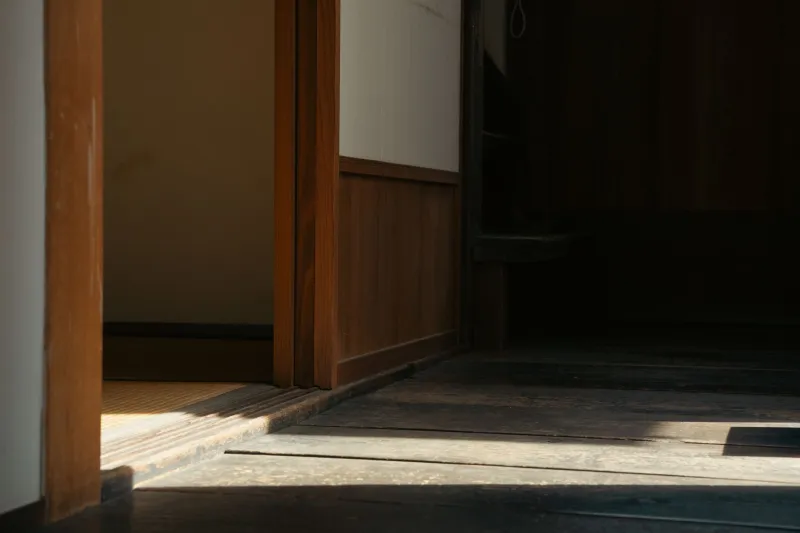
For American viewers encountering Japanese adult content for the first time, the initial response is often impatience. The pacing feels unusual. Scenes develop slowly. Conversations unfold at length before anything conventionally explicit occurs. Characters linger in domestic spaces — a kitchen, a hallway, a room where afternoon light falls across ordinary furniture. The Western viewer, conditioned by decades of production that treats the explicit moment as the product itself, may initially interpret this slowness as inefficiency. What becomes clear with sustained engagement is that the slowness is, in fact, the product.
The Psychology of the Unreached Moment
Cognitive research on desire consistently demonstrates that anticipation activates reward circuitry in ways that fulfillment alone cannot replicate. The brain does not simply respond to pleasure; it responds to the expectation of pleasure, and that expectation, properly managed, can sustain and intensify engagement across extended time. Japanese adult producers appear to have internalized this principle at an institutional level — not necessarily through explicit reference to neuroscience, but through a cultural aesthetic tradition that has long valued restraint as a form of sophistication.
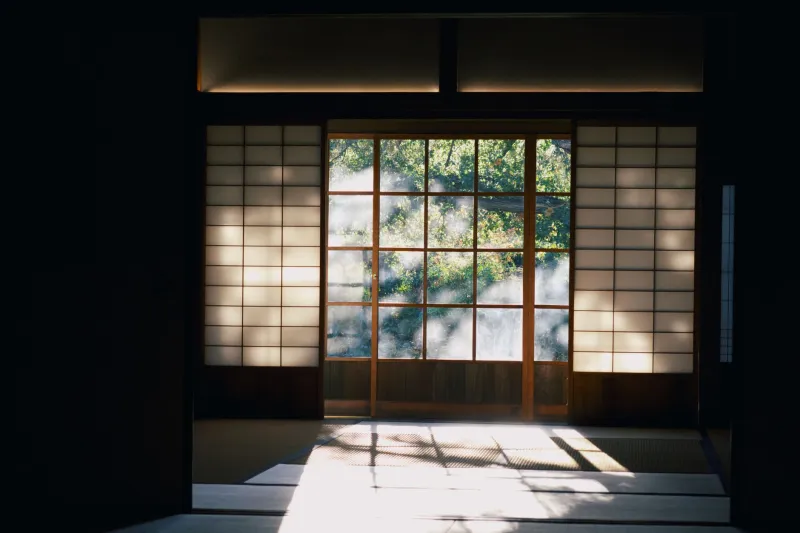
The concept of ma — a Japanese term describing meaningful negative space, the pregnant pause, the interval that carries weight — has relevance here. In music, architecture, theater, and visual art, Japanese aesthetic tradition treats absence as a compositional element rather than a gap to be filled. Adult content produced within this cultural context reflects that sensibility. The silence before a word is spoken matters. The moment a door closes without showing what occurs behind it matters. The camera that lingers on a face rather than cutting to action is making a deliberate argument about where the erotic charge actually resides.
Structure as Seduction
Examining the narrative architecture of Japanese adult productions — particularly those within the hitozuma genre, which centers on married or mature women navigating desire within the context of established domestic life — reveals a consistent structural grammar. These productions rarely begin in medias res. They establish character, circumstance, and emotional stakes before any physical development occurs. A viewer understands who this woman is, what her daily life contains, what she carries into a given encounter. That understanding is not incidental to the erotic experience; it is foundational to it.
The delayed reveal operates on multiple registers simultaneously. There is the obvious temporal dimension: explicit content arrives later in the runtime than American audiences expect. But there is also a psychological dimension in which the viewer's imagination is recruited as an active participant. When a camera frames a doorway and does not pass through it, the viewer constructs what lies beyond. When a conversation between two characters circles around an unspoken acknowledgment, the viewer inhabits the tension of that circling. The production does not deliver an experience so much as it creates the conditions for the viewer to generate one.
This is a fundamentally different model of spectatorship than the one dominant in American adult entertainment, where production values are marshaled toward comprehensive, immediate display. The American model treats the viewer as a recipient. The Japanese model treats the viewer as a collaborator.
The Technical Vocabulary of Withholding
Specific production choices facilitate this approach in consistent ways. Camera movement tends toward patience — slow pans, extended static shots, a reluctance to cut that would feel unusual in Western production contexts. Editing rhythms respect duration rather than compressing it. Sound design frequently foregrounds ambient audio — the environmental texture of a space — rather than immediately introducing music that signals emotional escalation. These choices collectively refuse to rush the viewer toward predetermined conclusions.
Lighting decisions also contribute. Japanese adult productions, particularly those positioned at the quality end of the market, often employ naturalistic or near-naturalistic lighting that roots scenes in recognizable domestic reality. The aesthetic is not designed to glamorize or idealize in the manner of American production, which tends toward high-key illumination that separates performers from ordinary life. Instead, the visual texture insists on ordinariness, and ordinariness grounds psychological investment in a way that fantasy environments cannot.
Within the hitozuma genre specifically, costuming and setting further reinforce the delayed-reveal logic. A character in conventional domestic clothing — the unremarkable visual vocabulary of daily life — creates a different kind of anticipatory tension than a character already positioned within an explicitly erotic frame. The distance between the ordinary and the intimate becomes the space the production asks viewers to cross imaginatively, and crossing it requires time.
What American Viewers Discover Through Patience
For American audiences willing to engage with this structural logic on its own terms, the payoff is qualitatively different from what faster-paced production delivers. The extended buildup does not merely delay gratification; it changes the nature of that gratification. Because the viewer has invested time, attention, and imaginative participation in the approach to an explicit moment, that moment carries accumulated weight. It is not simply a sequence of acts but the resolution of a sustained psychological experience.
This is, in a sense, what literary fiction does that genre fiction often does not — and the comparison is not as strained as it might initially appear. The best Japanese adult productions function as short psychological narratives in which desire is a force with history, context, and consequence. The explicit content, when it arrives, is embedded in meaning rather than isolated from it.
American viewers who discover Japanese adult content through streaming platforms — where algorithmic recommendation has made cross-cultural discovery increasingly common — frequently report a period of adjustment followed by a recalibration of preference. The patience required initially feels like a barrier; with familiarity, it comes to feel like the point. The waiting is not the price of admission. The waiting is the experience.
The Competitive Advantage of Restraint
From an industry perspective, this approach yields a counterintuitive competitive advantage. In a global streaming environment where explicit content is abundant and undifferentiated, productions that cultivate psychological depth and sustained engagement occupy a distinct position. They are not competing on the axis of immediacy, where supply is effectively infinite. They are competing on the axis of experience — and on that axis, the discipline of withholding creates genuine scarcity.
Japanese adult producers did not arrive at this position through market calculation alone. The aesthetic emerged from cultural context and was refined through decades of production practice. But the result, encountered by American viewers approaching this content in the streaming era, is a form of adult entertainment that operates by different rules and delivers different rewards. Understanding those rules is the first step toward appreciating what makes this tradition, in the fullest sense, irreplaceable.