The Ordinary as Erotic Architecture: How Japanese Adult Cinema Finds Intensity in the Unremarkable
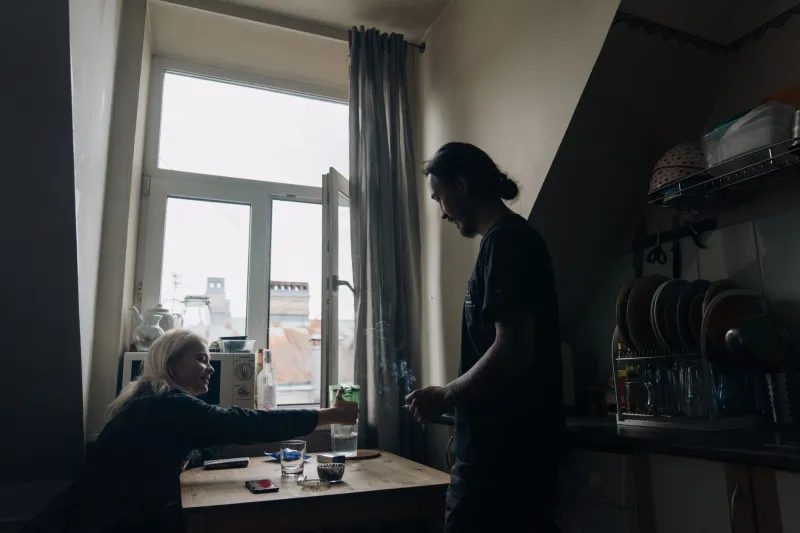
There is a particular kind of erotic tension that only becomes possible when the camera is pointed at something that would otherwise go unnoticed. A woman folding laundry with practiced efficiency. A couple moving around each other in a narrow kitchen, neither speaking, both aware. A quiet Sunday afternoon in which nothing is scheduled and the hours stretch without agenda. These are not the raw materials that most American adult productions would choose to build upon. Yet in Japanese adult cinema, such moments are not merely backdrop—they are the architecture of desire itself.
The philosophy at work here is neither accidental nor superficial. It reflects a considered understanding of how intimacy actually accumulates between people who share a life, and how that accumulation can be rendered visible on screen in ways that feel true rather than performed.
Dailiness as a Dramatic Language
American adult entertainment has historically operated on a logic of escalation. Scenarios are constructed to be immediately legible as erotic: the implausible premise, the convenient timing, the set designed to signal fantasy rather than reality. The underlying assumption is that desire requires a departure from the ordinary—that the viewer must be transported somewhere clearly removed from the textures of lived experience in order to engage fully.
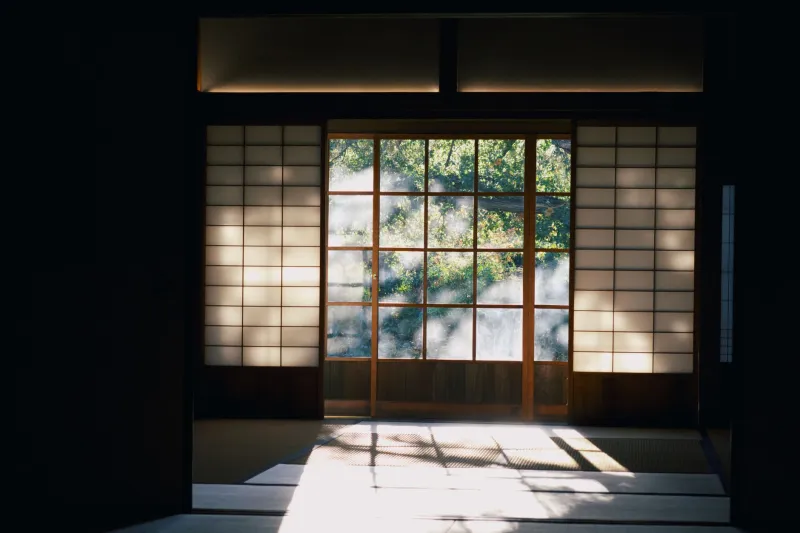
Japanese adult cinema, particularly within the hitozuma tradition, inverts this assumption entirely. The domestic setting is not a concession to limited production budgets or a failure of imagination. It is a deliberate choice rooted in a different theory of what makes desire compelling. The ordinary kitchen, the familiar bedroom, the afternoon light falling across a living room floor—these are not neutral containers for erotic content. They are active participants in the tension being constructed.
When a scene begins with a woman preparing a meal, the camera does not rush past this detail toward the moment the scenario is expected to escalate. It lingers. It observes the economy of her movements, the small rituals of a routine repeated so many times it has become unconscious. In that observation, a kind of intimacy is established before a single word has been exchanged between characters. The viewer is not transported to a fantasy location. They are drawn deeper into a reality that feels inhabited.
The Weight of the Unremarkable
What Japanese adult productions understand—and what American audiences are increasingly recognizing—is that the unremarkable carries genuine emotional weight precisely because it is unremarkable. A morning routine shared between two people who know each other thoroughly is not a neutral event. It is a record of accumulated time, of choices made and remade, of a particular kind of closeness that only develops through repetition.
This is the foundation upon which hitozuma content builds its erotic logic. The married woman at the center of these narratives is not a stranger encountered in a contrived circumstance. She is a person whose daily life the camera has already made visible—whose ordinariness the viewer has been invited to observe before desire enters the frame. When intimacy does emerge, it arrives against that background of established normalcy, and the contrast generates a tension that manufactured scenarios cannot produce.
Consider the difference between a scene that begins with two characters already in a state of obvious arousal and one that begins with a casual conversation about something entirely mundane—household logistics, a shared memory, a minor frustration from the week. In the latter case, the viewer witnesses the transition. They see the moment when something shifts, when the conversation becomes something else, when the ordinary afternoon becomes something neither character fully anticipated. That transition, and the authenticity of its staging, is where the real erotic work happens.
Why American Audiences Are Paying Attention
The growing Western appetite for this aesthetic is not difficult to explain, though it does require acknowledging something that mainstream American adult entertainment has been slow to accept: a significant portion of the viewing audience is not primarily interested in fantasy as escape. They are interested in fantasy as recognition.
There is a meaningful difference between content that invites viewers to imagine themselves somewhere entirely other than their actual lives and content that takes the textures of actual life seriously as erotic material. The former offers relief from the ordinary. The latter offers a reframing of it—a suggestion that the familiar circumstances of a settled life are not obstacles to desire but potential sites of it.
For American viewers who have spent years watching domestic life portrayed as the enemy of erotic possibility—in both adult content and mainstream romantic narratives—Japanese adult cinema's insistence on the contrary can feel genuinely revelatory. The kitchen is not where desire goes to die. It is, in these productions, where desire lives between its more dramatic expressions.
Production Discipline and Its Rewards
Achieving authentic ordinariness on screen is technically more demanding than it might appear. Contrived staging is, in a sense, easier to produce: the set is designed to read as erotic, the scenario provides immediate narrative direction, and the performers have clear parameters within which to operate. Producing a scene that feels genuinely casual—in which a morning routine reads as a morning routine rather than a morning routine performed for a camera—requires a different kind of discipline.
Japanese adult producers working in this tradition have developed a set of techniques that support this goal. Camera placement tends toward the observational rather than the intrusive. Editing rhythms follow the natural pace of the activity being depicted rather than accelerating toward predetermined moments. Performer direction emphasizes restraint and naturalness over demonstrative expression. The cumulative effect is footage that carries the texture of documentation rather than staging—a quality that American productions, with their tendency toward high-contrast lighting and aggressive camera movement, rarely achieve.
This discipline also extends to narrative pacing. The mundane opening of a scene is not treated as something to be endured before the real content begins. It is understood as content in its own right—as the necessary foundation without which what follows would lack its particular emotional register.
The Intimacy of the Familiar
What Japanese adult cinema has mastered, and what the hitozuma genre exemplifies with particular clarity, is the erotics of familiarity. Not the erotics of novelty, not the erotics of transgression, not the erotics of the extraordinary—but the specific and underexplored charge that exists within the known, the routine, the unremarkable.
For viewers accustomed to content that treats familiarity as erotic death, this reframing can be genuinely disorienting. It suggests that the years a couple has spent moving around each other in a shared kitchen have not diminished the erotic potential of that space but deepened it. That the afternoon with nothing scheduled is not empty time waiting to be filled but a particular kind of intimacy in itself.
This is the argument that Japanese adult cinema makes through its production choices, and it is an argument that a growing number of American viewers are finding persuasive. The unremarkable, handled with sufficient attention and craft, does not need to be made remarkable. It needs only to be seen clearly—and in that clarity, it becomes something that manufactured fantasy, for all its elaborate staging, cannot approach.