The Grammar of the Hidden: How Japanese Adult Cinema Builds Tension Through Strategic Absence
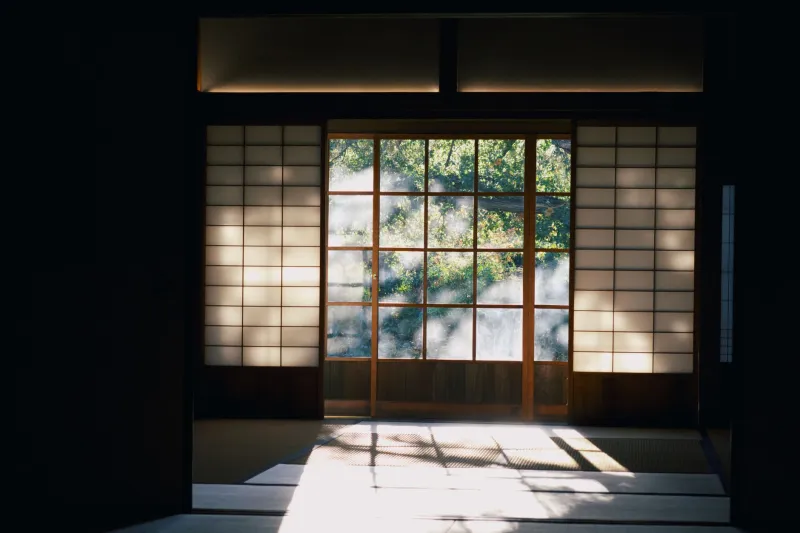
There is a moment familiar to any attentive viewer of Japanese adult cinema — a moment when the camera stops short. A doorframe interrupts the composition. A hand disappears behind a shoulder. The edit comes just before completion. In Western adult production, this would register as a failure of nerve, a missed opportunity, or a technical limitation. In the Japanese tradition, it is frequently the most calculated gesture in the entire sequence.
Understanding why requires a fundamental reorientation of how we think about desire and its relationship to visibility.
The Western Assumption of Total Disclosure
American adult entertainment has historically operated under a governing assumption: that desire is best served by the removal of all obstacles between the viewer and the object of interest. The camera pushes forward. Lighting eliminates shadow. Editing lingers. The implicit promise of the genre, as it has evolved in the United States, is comprehensive access — a kind of visual contract that pledges to leave nothing outside the frame.
This philosophy reflects broader cultural tendencies. American entertainment across categories tends toward the explicit, the declared, the fully articulated. Ambiguity is treated as a problem to be resolved rather than a condition to be cultivated. In the adult genre specifically, this manifests as a production ethic that equates visibility with value, and completeness with satisfaction.
The result is content that, for many viewers, paradoxically exhausts the very appetite it sets out to feed. When nothing is withheld, the imagination has no assignment. The mind, given everything, retains nothing to pursue.
What the Frame Refuses to Hold
Japanese adult cinema — particularly the hitozuma tradition, which concerns itself with the interior lives of married women navigating desire within the structures of long-term partnership — approaches framing as a form of argument. The composition does not simply record; it makes claims about what matters and, crucially, about what should remain unresolved.
Producers working in this tradition deploy off-screen space with a precision more commonly associated with theatrical staging than with adult content production. A scene may center entirely on a woman's face while the source of her reaction remains outside the frame's boundaries. The viewer is not denied information so much as redirected toward a different category of information — toward expression, toward interiority, toward the evidence of experience rather than the mechanics of its cause.
This is a meaningful distinction. The face that responds to an unseen touch communicates something that no explicit image of that touch could replicate. It invites the viewer into an interpretive relationship with the material, positioning them not as a passive recipient of visual data but as an active participant in constructing the scene's meaning.
Editing as Psychological Architecture
The editorial choices in Japanese adult cinema deserve particular attention, as they represent one of the most sophisticated tools in the genre's technical arsenal. Where American production tends toward extended takes that maximize exposure and minimize interruption, Japanese editors frequently cut at moments of maximum tension — not after resolution, but before it.
This practice, which runs counter to every instinct in conventional adult filmmaking, produces a distinctive psychological effect. The cut does not end the experience; it relocates it. What was happening on screen continues in the viewer's mind, shaped now by their own imagination rather than by the camera's record. The edit becomes an invitation to complete the scene internally, and what viewers construct in that interior space is, by definition, precisely calibrated to their own desires.
This is not accidental. It reflects a sophisticated understanding of how anticipation functions neurologically and emotionally. The anticipatory state — the condition of wanting without yet receiving — generates its own distinct form of pleasure, one that extended explicit imagery tends to foreclose rather than sustain.
Spatial Composition and the Architecture of Suggestion
Beyond editing, the spatial logic of Japanese adult cinema reflects a compositional philosophy rooted in suggestion. Rooms are framed to emphasize thresholds — doorways, corners, the edges of furniture — that divide visible and invisible space. Characters move through these divisions in ways that consistently remind the viewer that the frame is not the world, that significant things are always occurring just beyond its edges.
This spatial vocabulary draws, consciously or not, on deep traditions in Japanese visual culture. The concept of ma — the meaningful interval, the productive gap — appears throughout Japanese aesthetics, from the deliberate silences in traditional music to the negative space that defines ink painting. Applied to adult cinema, it produces compositions that treat the unseen not as absence but as presence of a different kind: a charged, active space that the viewer's imagination populates continuously.
For American viewers encountering this approach, the effect is often disorienting before it becomes compelling. The expectation of full disclosure, so thoroughly embedded by domestic production conventions, initially reads the withheld image as a deprivation. But repeated exposure tends to recalibrate that response. What was experienced as absence begins to register as invitation.
The Hitozuma Context and the Particular Power of Restraint
The hitozuma genre — which Hitozuma Realm has documented and analyzed at length — provides an especially illuminating context for understanding why restraint carries such weight. The subject matter of these productions concerns women whose most significant experiences are, by their nature, interior and partially concealed: the management of desire within marriage, the negotiation between private feeling and public role, the persistence of individual longing within collective domestic life.
A production philosophy that prioritizes total visibility would be philosophically at odds with this material. The hidden frame, the withheld image, the cut before completion — these formal strategies mirror the very condition the genre is exploring. Restraint in the camera's gaze echoes the restraint that defines the characters' lives. The form becomes an argument about the subject.
This coherence between content and form is rarely accidental in the best Japanese adult productions, and it is one of the qualities that distinguishes the genre from work produced without such self-awareness.
Why American Viewers Are Responding
The growing American audience for Japanese adult content — a development well documented across streaming platform data and enthusiast community discussions — suggests that the appetite for this more restrained visual grammar is broader than niche demographics might imply. Viewers saturated by the explicit conventions of domestic production are discovering, often with some surprise, that the withheld image generates an engagement that the fully disclosed one does not.
This is not, ultimately, a paradox. It reflects something consistent about how desire operates: it requires an object it has not yet reached. Japanese adult cinema, through its disciplined management of visibility, keeps desire in motion. The grammar of the hidden is, at its core, a grammar of perpetual wanting — and perpetual wanting, it turns out, is a remarkably durable form of pleasure.