The Restraint Dividend: How Japanese Adult Studios Built Market Dominance by Spending Less and Delivering More
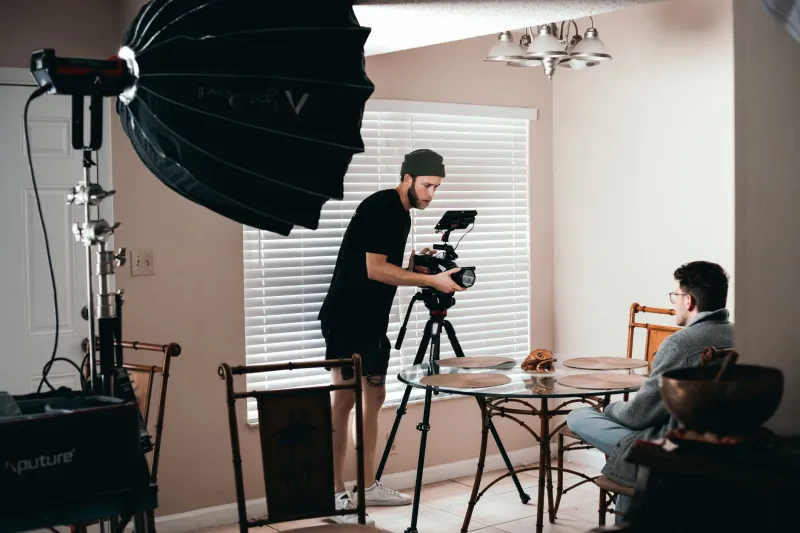
In most sectors of the entertainment industry, the relationship between production expenditure and audience reception is assumed to be broadly positive. Spend more, deliver more, attract more. The major American adult entertainment studios of the 1990s and early 2000s operated on precisely this logic, investing heavily in production infrastructure, lighting equipment, set construction, and the kind of visual polish that signaled professional legitimacy. For a period, this approach defined what premium adult content was understood to look like.
The Japanese adult industry, particularly its smaller independent studios and the production companies that would come to dominate international digital distribution, developed along a fundamentally different economic philosophy—one that treated restraint not as a budget limitation to be apologized for but as a deliberate aesthetic and commercial strategy. The financial results of this divergence are now sufficiently clear to merit serious analysis.
The Cost Structure That Changed the Calculus
To understand the competitive advantage that Japanese studios developed through aesthetic restraint, it is necessary to first understand the cost structures involved. High-production-value adult content requires significant investment across multiple categories: professional lighting rigs, set construction or high-end location rental, post-production color grading, and the technical crew required to operate this infrastructure competently.
Japanese studios operating in the documentary-realist tradition—shooting in actual domestic environments, using available or minimal supplementary lighting, and maintaining small production crews—carried a fraction of these costs. This was not, initially, primarily a strategic decision. Japanese independent adult production emerged from a cultural and economic context in which small-scale, quasi-documentary filmmaking was an established mode, and the adult industry inherited both its aesthetic conventions and its cost structure from that tradition.
What became strategically significant was the discovery that the lower-cost aesthetic was not merely acceptable to audiences—it was, for a substantial and growing segment of viewers, actively preferable. The production economics that had been a constraint became a competitive advantage.
Authenticity as a Product Attribute
The concept of authenticity as a commercially valuable product attribute is well established in consumer goods markets—the craft brewery that sells its small-batch limitations as a quality signal, the artisanal food producer whose visible imperfections communicate genuineness that industrial smoothness cannot replicate. Japanese adult production, often without explicitly framing it in these terms, was exploiting an equivalent dynamic.
The visual qualities that high-budget production works to eliminate—slight inconsistencies in lighting, the ambient sounds of real domestic environments, the uncontrolled elements that enter a scene shot in an actual apartment rather than a purpose-built set—function in the documentary-realist tradition as authenticity signals. They tell the viewer that what they are watching is real, or at minimum real-adjacent, in ways that a technically flawless production cannot credibly claim.
For the hitozuma genre specifically, this authenticity signaling is commercially essential. The genre's appeal is grounded in the conviction that the scenarios depicted have an organic relationship to actual experience—that the women, the settings, the emotional dynamics are genuinely representative of a world that exists rather than a fantasy assembled from stylized components. Every element of high-end production that is removed from the equation reinforces this conviction.
The Digital Distribution Inflection Point
The competitive dynamics of the global adult entertainment market shifted decisively with the emergence of digital distribution platforms in the mid-2000s. Physical media had imposed a rough equivalence between the distribution reach of well-capitalized American studios and their smaller Japanese counterparts—both were constrained by the logistics and costs of physical retail. Digital distribution eliminated this equivalence entirely.
Japanese studios, whose lower cost structures had already positioned them for profitability at smaller audience scales, were able to price their digital content competitively while maintaining margins that their higher-cost American competitors could not match at equivalent price points. The economics of restraint, which had been advantageous at the production stage, became doubly advantageous at the distribution stage.
American studios attempting to compete in the digital environment faced a structural problem: their production cost bases had been built for a physical media market that rewarded high production values as a signal of premium positioning. In the digital market, where content from multiple countries competed on the same platforms at comparable price points, that premium positioning signal was available to any producer who could deliver the aesthetic—and Japanese studios were delivering a competing aesthetic that a significant audience segment preferred.
What the American Industry Misread
The American adult entertainment industry's response to the competitive pressure from Japanese content was, broadly speaking, to double down on production values—to interpret the challenge as one requiring more polish, more technical sophistication, more of the qualities that had defined premium positioning in the physical media era. This response misread the nature of the competitive threat.
The viewers migrating toward Japanese content were not doing so because Japanese production had become technically superior. They were doing so because the aesthetic philosophy underlying Japanese production—its commitment to documentary realism, its willingness to let imperfection serve authenticity, its rejection of the visual grammar of fantasy in favor of the visual grammar of the real—was delivering something that technically superior production was not.
Recognizing this would have required American producers to accept a counterintuitive proposition: that spending less, in specific and deliberate ways, could produce a more commercially effective product. The institutional logic of the major studios made this proposition difficult to evaluate seriously, let alone act upon.
The Lesson That Remains Available
The financial history of the past two decades in adult entertainment distribution is, among other things, a case study in how aesthetic philosophy and economic performance interact in ways that conventional industry analysis consistently underestimates. Japanese studios did not achieve their market position by competing on the terms that American studios had established. They achieved it by operating according to a different set of terms entirely—terms that, once articulated, are straightforward: audiences do not uniformly reward production expenditure. A meaningful segment of any audience rewards the feeling of reality, and reality is cheaper to produce than fantasy.
For the American adult entertainment industry, this lesson has been available for examination for the better part of two decades. Whether it will eventually be internalized in production philosophy, rather than simply acknowledged as an interesting anomaly, remains the more consequential open question.