The Long Take: How Japanese Adult Cinema's Commitment to Patience and Proximity Transforms the Viewing Experience
A Different Relationship With Time
Anyone who has spent meaningful time with American adult entertainment and then encountered Japanese production for the first time is likely to notice, before anything else, the difference in tempo. Where mainstream Western content moves with the urgency of advertising—rapid cuts, compressed timelines, immediate escalation—Japanese productions frequently proceed at a pace that American viewers initially find disorienting.
Scenes develop slowly. Cameras hold positions long past the point where a Western editor would have intervened. Moments of apparent stillness are allowed to breathe rather than being excised in post-production. The experience of watching can feel, at first, like waiting. Over time, for viewers who remain with it, it begins to feel like something else entirely: immersion.
This distinction is not accidental, and it is not a product of lower production budgets or less sophisticated technical infrastructure. It reflects a deliberate theory of how psychological engagement is generated—one with deep roots in Japanese cinematic tradition and a coherent logic that rewards careful examination.
The Inheritance of Ma
Japanese aesthetic philosophy has long recognized a concept that resists direct translation into English: ma, roughly rendered as negative space, or the meaningful interval between events. In music, it describes the silence between notes. In architecture, it describes the empty space that gives a room its character. In cinema—including adult cinema—it describes the moments of apparent stillness that allow tension to accumulate rather than dissipate.
Western entertainment, operating under different cultural assumptions, tends to treat such intervals as waste. If nothing is visibly happening, the reasoning goes, the viewer's attention will drift. The solution is constant stimulation: rapid editing, continuous action, unrelenting escalation.
Japanese adult directors, whether consciously or through absorption of a broader cultural aesthetic, have historically operated from the opposite premise. The interval is not waste; it is where anticipation lives. A camera that lingers on a face, on hands, on the small physical details of an encounter, is not failing to move forward. It is building a particular kind of pressure—one that, when finally released, carries far more psychological weight than any amount of rapid cutting could manufacture.
Camera Proximity as Intimacy
Beyond pacing, the physical relationship between camera and subject in Japanese adult production deserves specific attention. Western productions frequently employ shooting styles borrowed from music videos and action cinema: dynamic movement, multiple angles cut together rapidly, a visual language designed to communicate energy and spectacle.
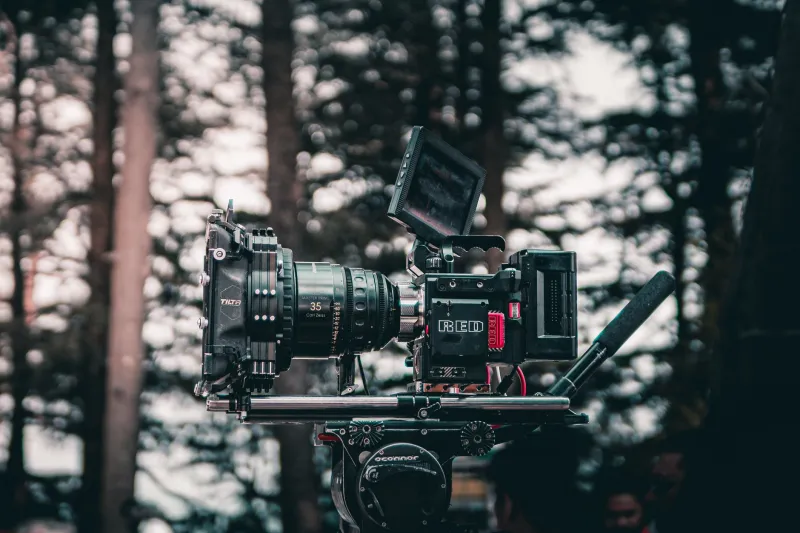
Japanese productions, by contrast, often place cameras in positions that emphasize closeness and stillness. Rather than circling subjects to generate visual interest, the camera holds steady at intimate distances, recording with a patience that mirrors the quality of genuine human attention. The effect is less like watching a performance and more like witnessing something private.
This is a technically demanding choice. A static camera at close range is merciless about performance quality—there is nowhere to hide, no editing rhythm to carry a weak moment past the viewer's notice. Every aspect of what appears on screen must justify the sustained attention the camera is requesting. When productions succeed under these conditions, the result is a quality of presence that more dynamic shooting styles rarely achieve.
The Architecture of a Scene
Examining the structural organization of Japanese adult scenes reveals another dimension of this directorial philosophy. Where American productions frequently organize content around escalating visual beats—a logic borrowed from action filmmaking—Japanese productions more often follow an emotional arc. Scenes have beginnings, middles, and ends in a genuinely narrative sense. The psychological state of participants is tracked across time. Small shifts in mood or dynamic are recorded and allowed to matter.
This structural approach has practical consequences for viewer engagement. Research in media psychology consistently suggests that narrative investment—caring about what happens next for reasons beyond pure visual stimulation—generates more sustained attention and more lasting emotional response than spectacle alone. By organizing content around emotional rather than purely physical escalation, Japanese productions engage viewers at multiple levels simultaneously.
For American audiences accustomed to content that delivers immediate and undifferentiated stimulation, the experience of watching a Japanese production can require a recalibration of expectations. Viewers who make that recalibration frequently report that they find it difficult to return to Western alternatives without registering an absence—something they had not previously noticed was missing.
Naturalistic Sound and What It Signals
The audio design of Japanese adult productions merits separate consideration, as it functions as an extension of the same broader philosophy governing pacing and camera work. Soundscapes in these productions tend toward the naturalistic: ambient environmental audio, genuine physical sound, vocal response that is calibrated to the moment rather than performed for the microphone.
Western productions frequently layer audio aggressively—music, heightened sound effects, vocal performances pitched to communicate intensity to a viewer at a distance. The result is a sonic environment that announces itself, that reaches out toward the audience and demands a response.
Japanese productions more often create audio environments that draw the viewer in rather than projecting outward. The quieter, more naturalistic approach reinforces the visual intimacy of close camera work and unhurried pacing, creating a coherent sensory experience whose cumulative effect exceeds what any single technical element could achieve alone.
Patience as a Market Position
For a US audience increasingly saturated with content optimized for immediate gratification, Japanese adult production's commitment to patience and proximity represents something genuinely rare: a form of entertainment that respects the viewer's capacity for sustained engagement. The technical choices described here are not merely aesthetic preferences. They constitute a claim about what viewers are capable of and what they deserve.
The growing American appetite for this material suggests that claim is finding an audience—one that has perhaps always existed but lacked content sophisticated enough to satisfy it. In that sense, the long take is more than a directorial technique. It is a statement of intent.


