Small, Lean, and Profitable: The Japanese Studio Model America's Independent Adult Creators Keep Overlooking

Photo: San Diego Air & Space Museum Archives, Public domain, via Wikimedia Commons
The American independent adult producer operates in a state of permanent siege. Free tube sites have collapsed the willingness to pay. Payment processors deplatform with a phone call. Social media bans make audience-building a Sisyphean task. Every conference panel on the US industry circles the same questions: how to survive, where to distribute, whether independence is still viable at all.
Meanwhile, an ocean away, hundreds of small Japanese production houses continue doing business with a stability that looks, from the American vantage point, almost like a different economic system. It is not. It is a set of decisions — structural, cultural, and commercial — that American independents have largely declined to make.
The Anatomy of the Small Studio
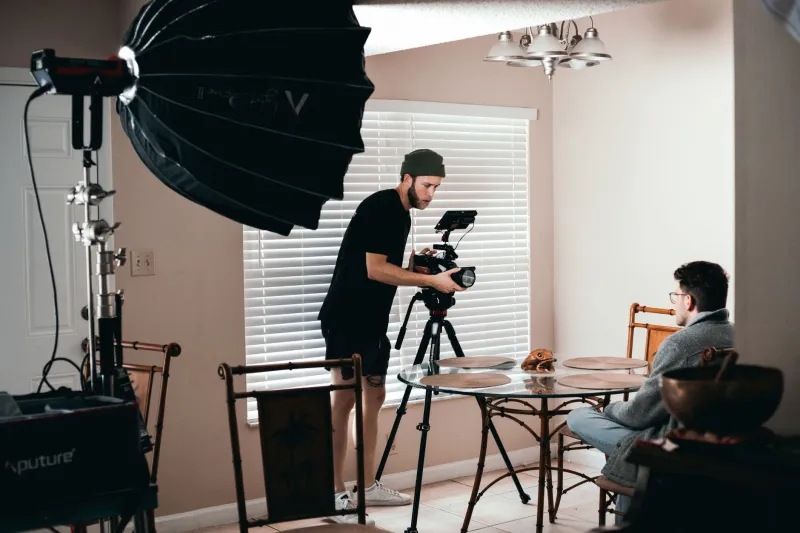
The typical Japanese adult production house is startlingly small. A director who may also produce, a compact crew of three to six, an editing arrangement rather than an in-house post facility, and a distribution relationship with one of the major sales agents. Overhead is minimal because ambition, in the American sense, is minimal. The goal is not scale. It is consistency: a release cadence, a recognizable style, a catalog that compounds.
This leanness is often misread by Western observers as poverty. It is closer to discipline. Because the cost of any single release is low, the studio can afford to develop a distinctive house style over years without a hit-driven mindset. The catalog, not the individual title, is the asset — and catalogs, unlike viral moments, appreciate.
The Direct Fan Relationship as Infrastructure
The second pillar is the fan event economy. Japanese studios maintain direct, monetizable relationships with their audiences through signed release events, fan meetups, and a robust ecosystem of physical and digital goods surrounding each title. The performer is not merely talent-for-hire; she is the nexus of a community whose loyalty converts directly into pre-orders and repeat purchases.
American independents have discovered fragments of this model — OnlyFans demonstrated the direct-relationship principle at scale — but rarely the full architecture. The Japanese version is not a subscription to a person. It is a subscription to a sensibility: the studio's style, its casting philosophy, its pacing. Fans buy the label before the title. That brand-level loyalty is what insulates small studios from piracy and free-content erosion far better than any DRM scheme.
The Physical Media Surprise
The third pillar sounds like nostalgia but is in fact a pricing strategy. Japan never fully abandoned the physical disc, and its adult market followed. DVDs and Blu-rays sell at premium price points — often the equivalent of twenty to forty US dollars — to collectors who value packaging, artwork, and permanence. The physical edition functions as a luxury tier, while digital rentals serve the casual market. Two price points, two audiences, one catalog.
American indie producers, who abandoned physical media a decade ago and now compete at zero with the tube sites, might study this with some humility. The collector's edition is not merely a revenue line. It is a statement that the work is worth owning — and customers do not pay to own things they are told are disposable.
The Uncomfortable Lesson
None of this translates perfectly to the American context. Japan's retail ecosystem, its regulatory history, and its distribution infrastructure are not exportable. But the underlying principles are: keep costs low enough that style can outlast hits; build direct relationships at the level of the brand, not just the performer; and create a premium tier that treats the audience as collectors rather than traffic.
The American indie fight against free content has been framed as a war for attention. The Japanese small-studio model suggests it is actually a war for meaning — for giving the audience a reason to believe that what they are buying is irreplaceable. The studios that solved that problem did not need to win the algorithm. They built something the algorithm cannot replicate: a name people seek out on purpose.